


 Locations






The thousands of new electric cars on Canadian roads every year may be a win for the climate, but the batteries lead to an end-of-life waste problem. The solution from Mapleview Energy is to reuse them as stationary energy storage.
A Toronto-based startup founded by CEO Nick Nesbitt in 2024, Mapleview aims to give retired electric vehicle (EV) batteries “a productive second life.” When an electric car’s battery reaches end-of-life, it usually retains 70 to 80 per cent of its original capacity, enough to be reused for other purposes.
Nesbitt, who took an interest in waste management and the circular economy from his university studies and career, saw “there’s a massive problem coming down the pipeline when it comes to dealing with end-of-life EV batteries,” he said in an interview with Sustainable Biz Canada.
Over 90,000 EV batteries in Canada will need to be recycled by 2040, a report by Lark Scientific states, and could rise to 500,000 by 2045. Ontario’s infrastructure, technology and labour force is not prepared for a mountain of EV batteries, Nesbitt said. But this offers a “huge” opportunity to build the infrastructure to process those batteries, he added.
Noticing that no one was building EV battery repurposing capacity in the province, Mapleview aims to address these problems, Nesbitt said, while simultaneously tackling issues the province is facing such as rising electricity demand and costs, and need for energy resilience.
Giving EV batteries a second chance
To start, Mapleview reviews the EV batteries supplied from its partners such as automakers and fleet operators. Once the batteries are brought in, Mapleview inspects the devices for physical damage, measuring the voltage, testing capacity, pairing the batteries by capacity and voltage, and testing again.
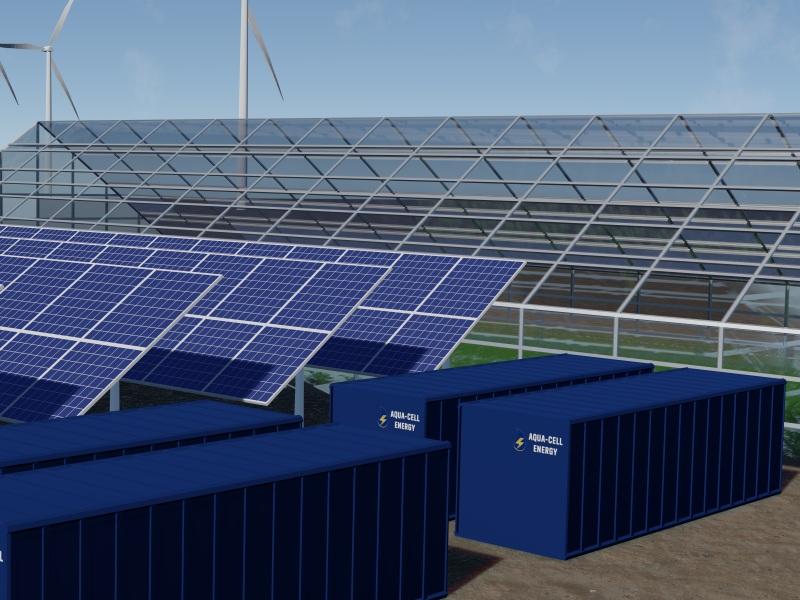
If the battery meets muster, Mapleview sets it aside to be part of a battery pack, which goes toward an energy storage system installed within a shipping container.
Most of the EV batteries Mapleview handles can be repurposed, Nesbitt said. For those that do not meet its standards, Mapleview examines if the batteries can be reconditioned, used for the company's research and development or recycled.
A 2026 study in the journal Resources, Conservation and Recycling found second-life deployments of EV batteries in stationary energy storage could reduce the life cycle greenhouse gas emissions by 22 to 51 per cent compared to building new battery systems.
To showcase its potential, Mapleview is working on two paid pilot projects.
The first is a 600-kilowatt-hour (kW-h) installation on a farm in southwestern Ontario, expected to be commissioned in August. The second is a 450 kW-h project in Southern Ontario for a greenhouse, to be commissioned in October.
In 2027, Mapleview aims to undertake 12 to 15 projects in the capacity range of the pilots, Nesbitt said. Another expectation is to see the company raise its ambition, taking on a project in the next one to two years in the megawatt-hour-scale.
Dream for a gigafactory

Mapleview’s customers are expected to be clients desiring lower electricity costs, such as medium-sized commercial and industrial businesses or the agricultural sector, Nesbitt said. Some may wish to pair their on-site solar system with a battery or have a quieter alternative to a noisy diesel generator, he explained.
To commercialize Mapleview, Nesbitt envisions moving beyond a focus on selling the energy storage systems to what the company refers to as a battery-as-a-service business model. This entails installing, operating and supporting the projects over their life cycle.
The client would not need to put up upfront capital, while Mapleview designs, builds and deploys a customized battery energy storage system. Once installed, Mapleview would retain a long-term role in the asset, including ownership or financing where applicable, system operation, monitoring, optimization, maintenance and battery-module replacement.
“There’s a lot of benefit of having a long-term service and maintenance agreement around the system,” Nesbitt said.
To date, Mapleview raised approximately $750,000 in equity this spring and received approximately $250,000 in grants.
The key milestones for its next fundraise, Nesbitt said, are signing around 12 more deals for 2027, filing provisional patents for core technologies like its battery management system, and bringing in more engineering experts.
The next fundraise, expected to take place in 2027, would let Mapleview move to a “proper facility,” Nesbitt said. Today, Mapleview works out of an electrical integration and engineering facility in Guelph, Ont., and labs in Ontario Tech University and Toronto Metropolitan University.
Nesbitt’s ultimate goal for Mapleview is to operate a gigafactory in Ontario that can push out gigawatt-hours of energy storage equipment and employ hundreds of people, serving global markets like Latin America and Africa.



 Industry Events
 Locations
