
 Locations





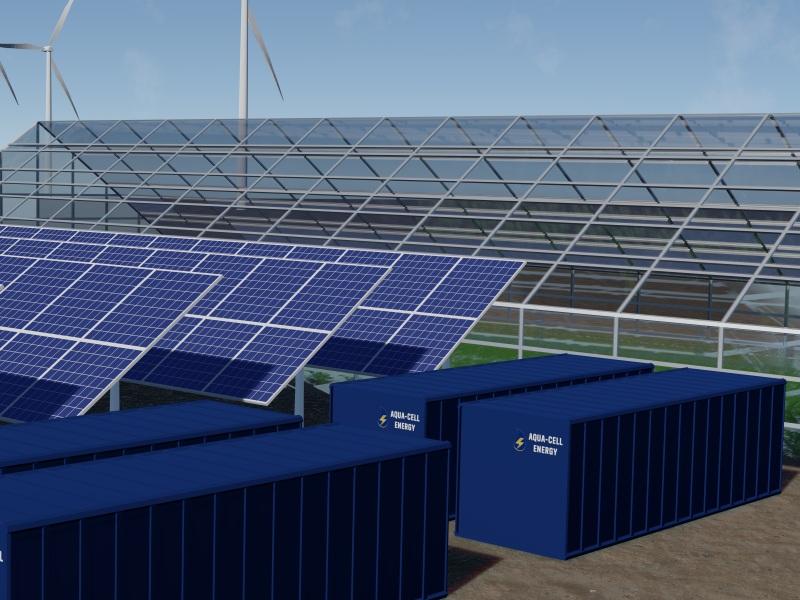
Saltwater batteries developed by Edmonton-based Aqua-Cell Energy could be a low-cost solution to the ever-rising demand for reliable energy storage in Canada and the world.
Founded by CEO Keith Cleland and CTO Ellsworth Bell in 2020, the company was spun-out of Cleland’s master’s degree research on saltwater flow battery technology at the University of Waterloo, where he met Bell.
Rather than large batteries based on lithium, a metal at the mercy of geopolitics and carrying a high environmental cost when mined, Aqua-Cell proposes a simpler, cheaper solution that could offer long-term energy storage by simply making brine.
“Our main cost is – if we’re going to longer-term storage – is larger tanks of saltwater, which becomes a very affordable way to store renewable energy,” Cleland said in an interview with Sustainable Biz Canada.
Progressing on Cleland’s ambition to turn the technology into a business if proven feasible, Aqua-Cell has received millions of dollars in funding, is building a demonstration unit and plans to deploy a test unit in Medicine Hat, Alta.
Aqua-Cell's briny batteries
Aqua-Cell’s technology is based on equipment the water treatment industry uses for desalination. It consists of liquid tanks which store the saltwater and a battery stack. The saltwater can store electricity and release the energy on demand.
The company’s batteries can store 12 hours of electricity, Cleland said, and up to 100 hours. The system is also scalable; to double the capacity, simply double the number of saltwater tanks.
There are several advantages to the technology compared to its lithium counterpart, Cleland said.
First, he said saltwater batteries are far more affordable. The batteries run on a combination of ordinary salt and clean water, which are much more accessible and stable in price compared to lithium. The cost of lithium can run into the thousands of dollars per tonne and fluctuates frequently. Cleland expects Aqua-Cell’s batteries to cost around 80 to 90 per cent less than its lithium-ion counterparts.
Second, Cleland noted the freedom from the lithium supply chain. Most lithium mining, processing and cell manufacturing takes place outside of Canada and exposes the lithium battery industry to geopolitical risks. By comparison, “You can get saltwater just about wherever you go,” Cleland said.
Finally, saltwater batteries do not have the same environmental issues over mining unlike lithium batteries, he said.
Aqua-Cell's first pilots
Aqua-Cell has deployed its first large-scale prototype that is as “tall as me,” Cleland said. To date, the startup has received $3.5 million in grants and other funding to grow its team which currently stands at four full-time employees.
The company is moving on to a shipping container-sized pilot unit which is currently being built. The plan is to deploy it this spring in Medicine Hat as Aqua-Cell was one of the winners of the city’s Energy Innovation Challenge. Aqua-Cell is targeting a kilowatt-scale pilot at a 12-hour discharge duration.

Aqua-Cell also has plans for a second pilot unit to test its next-generation technology.
“We’re using these pilots as a way to generate case studies for our target customers,” Cleland said, “and say, ‘Hey, this is the performance now.’”
After launching its pilots, Aqua-Cell looks to move to a small commercial-sized unit in the megawatt-hour-scale by 2028. Once the company has established its credibility, it then aims to work with manufacturing partners to expand the business and commercialize.
Providing grid stability
The company’s commercialization roadmap is to work with utilities in managing power demand during peak hours. Grids are anticipated to face even more stress from electricity-hungry electric vehicles and data centres which could strain energy supplies, Cleland said, giving Aqua-Cell an opening with products like a 200-megawatt-hour battery.
Most of Aqua-Cell’s clients, he continued, are expected to charge saltwater batteries when electricity is at its cheapest, which is typically when renewables are providing the most power to the grid.
“They might have to invest millions and millions of dollars into new grid infrastructure,” Cleland said. “Whereas they could use an Aqua-Cell battery that was charged with solar power or low-cost overnight power and then support the grid during those peak times.”
Aqua-Cell’s batteries could back-up utilities during peak demand, he said. Additionally, data centre operators, microgrid owners and factory owners could combine their renewable energy generation with Aqua-Cell’s batteries.
Cleland’s goal is to scale up Aqua-Cell in Canada first, then explore other markets. By 2035 and beyond, his hope is to see the company widely recognized in the long-duration energy storage sector and operating at the gigawatt-hour scale.


 Industry Events
 Locations