
 Locations





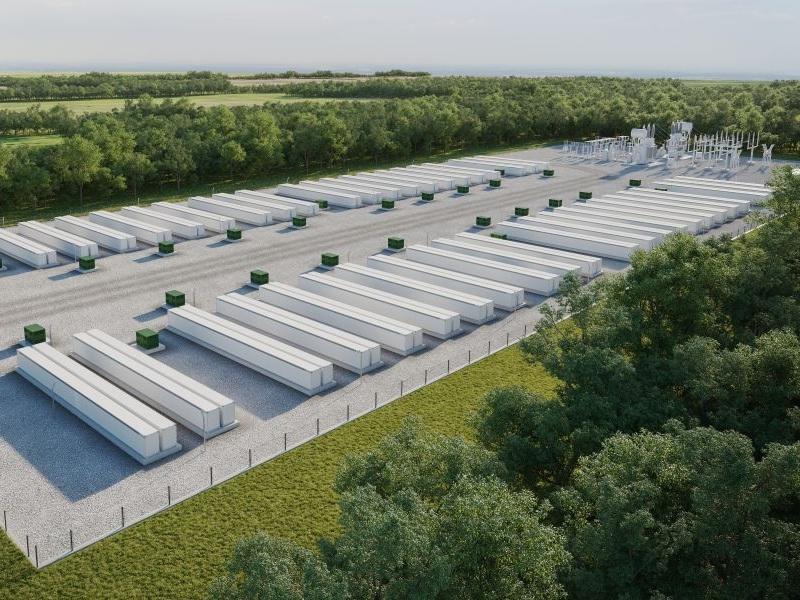
The partners behind a battery storage facility in Simcoe County have been granted an award by Ontario’s electricity system manager, adding 150 megawatts (MW) of capacity to the province’s pipeline.
NRStor Inc., Aecon Concessions, Sitka Power Inc., the Mississaugas of the Credit Business Corporation and the Six Nations of the Grand River Development Corporation announced the execution of a 20-year capacity contract with the Independent Electricity Systems Operator (IESO) for the Simcoe Battery Project.
To be developed in Norfolk County — west of Niagara Falls and east of London — and near its namesake community, commercial operations for the facility are targeted for 2030.
The five partners are developing the project through a jointly owned organization named Simcoe Battery Project GP Inc. Half of the asset is owned by Indigenous partners, namely the business development groups of the Six Nations of the Grand River and Mississaugas of the Credit First Nation.
“It provides better, reliable electricity — a more reliable grid. It provides additional capacity and support for grid reliability,” Trevor White, president and CEO of Sitka, said in an interview with Sustainable Biz Canada about the Simcoe battery energy storage system (BESS).
Batteries support renewables development
Toronto-based NRStor is the lead developer of the project, White said, and Aecon is the engineering, procurement and construction provider. Calgary-based renewable energy developer and independent power producer Sitka is supporting the asset’s long-term operations and asset management.
The partners are to provide electricity storage services to the IESO through a 20-year agreement, receiving payments from the organization for capacity services, energy sold to the grid and ancillary services.
White declined to disclose the cost of the project.
The development is one of three projects selected through the first window of the IESO's Long-Term 2 (LT2) capacity services request for proposals, which included Phase 2 of the 300 MW Napanee Battery Energy Storage System and the 190 MW Eagle Lake Power Reserve.
Projects like Simcoe and other BESS can support renewables build-out in Ontario, White said, as intermittent power sources such as wind and solar have more reliability when paired with energy storage.
“Without baseload, you require energy storage to help enable more renewables procurement onto the grid.”
The development also reduces the need for natural gas generation and the accompanying greenhouse gas emissions, NRStor said.
Sitka developing 50 MW of solar as well
The Simcoe Battery Project follows two contract awards under the IESO's LT2 energy procurement for partnerships in which Sitka holds an ownership interest, centred on the Timmins Mountjoy Solar and Chatsworth Solar projects. Combined, both total approximately 50 MW of solar generation capacity.
Like the Simcoe BESS, both projects are 50 per cent owned by Indigenous partners. The start of operations for the two is targeted for late 2028, White said.
Both solar projects complement Sitka’s solar, wind and energy storage operations in Ontario, White said, and align with the company’s strategy to support the province’s renewable energy growth. Its operating projects in Ontario include the eight MW Gesner Wind Farm located east of Chatham and the 10 MW David Brown Solar project near Cornwall.
The three Sitka projects represent over $400 million of capital deployment to clean energy infrastructure in Ontario, the company said.
BESS build-out in Ontario
To date, Ontario has procured approximately 3,600 MW of utility-scale battery energy storage, capable of powering 3.6 million Ontario homes during peak demand periods, the Canadian Renewable Energy Association (CanREA) said in a June release following the first window of the LT2 procurement.
The Ontario government has made energy storage procurement a priority because of its expectations for electricity consumption to rise 75 per cent by 2050. Major factors include a rising population, electrification of infrastructure and Ontario’s growing industrial sector.
As of Dec. 31, 2025, Ontario had 510 MW of installed energy storage capacity, CanREA reported. Those operating projects include the 250 MW Oneida Energy Storage Project in Jarvis and the 120 MW York Battery Energy Storage System.
Large-scale batteries beat out natural gas plants in the auction which included the Simcoe Battery Project, Environmental Defence noted.


 Industry Events
 Locations