
 Locations





Canaan Inc., a Singapore-based bitcoin mining hardware manufacturer, has partnered with Richmond, B.C.-based Bitforest Investment Ltd. on a Manitoba pilot project to reuse the heat from a computing system for a greenhouse.
As pressure ramps up to find ways of addressing the high energy use of computing facilities like data centres, Canaan is “looking to partner with companies like (Bitforest) who have ideas for innovative ways to use heat reuse systems,” Canaan’s vice-president of corporate affairs Gwyn Lauber told Sustainable Biz Canada in an interview.
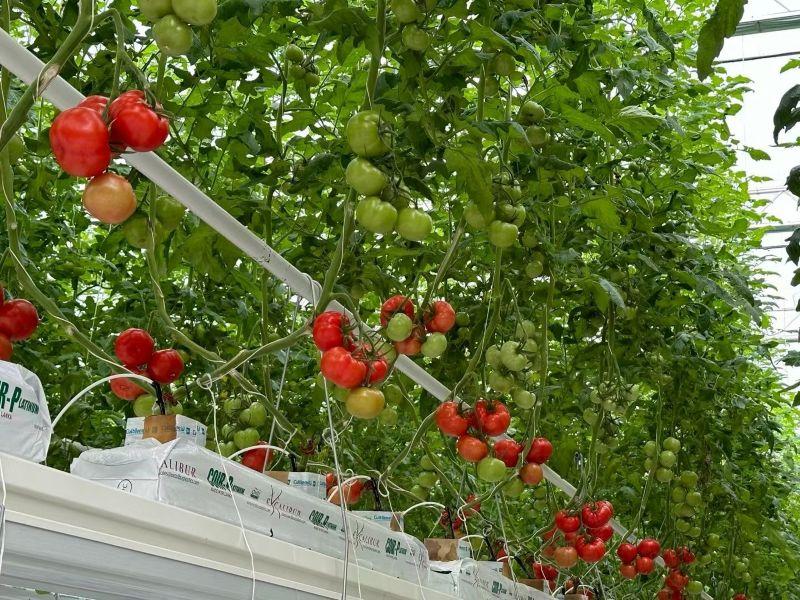
The companies plan to recover heat from a three-megawatt (MW) Avalon computing system made by Canaan and redirect it to a nearby greenhouse where it will help grow tomatoes.
As a proof-of-concept, it will give Canaan an idea of the efficiency of such technology as it considers similar efforts for the future.
Canaan was founded in 2013 by Nangeng Zhang, its CEO and chairman. The company produces bitcoin mining equipment for corporations and individuals. Zhang married his fascination with bitcoin mining and energy efficiency through Canaan, Lauber said. For example, it makes equipment that doubles as a home heater.
Bitforest is a data centre and greenhouse investor, builder and manager, according to its website. It will be responsible for the greenhouse heat reuse project. Sustainable Biz Canada has reached out to Bitforest for comment. We will update this article with any additional information if it becomes available.
'An incredibly efficient system'
In large computing facilities, the heat is often removed with liquid cooling. A closed loop of pipes carries a fluid through the machines to absorb the thermal energy, where it is then expelled outdoors. The cooled fluid is then recirculated to be reused.
For the Canaan-Bitforest project, the companies are taking a different route. Rather than wasting the heat generated by the servers, which are to be held in four liquid-cooling containers outside the greenhouse, the heat recovery system will capture it to preheat the intake water for the greenhouse’s boilers. Doing so would reduce the energy needed to warm up the facility.
Canaan estimates approximately 90 per cent of the electricity consumed by the computing servers will be recirculated throughout the greenhouse. “So it should be an incredibly efficient system,” Lauber said.
The pilot is expected to begin in Q2 and run for 24 months. “The ultimate goal is for the technology to either be self-sustaining – make the greenhouse self-sustaining and to be the only heat source,” she explained, “or something that will be supplementing other forms of heat.”
The heat recovery system is expected to offset some of the heating costs of the greenhouse. An undisclosed company is the owner of the greenhouse.
Energy recovery systems are having a moment

Last October, Canaan launched a project with Calgary-based energy infrastructure firm Aurora AZ Energy Ltd. to tap into flared natural gas on a wellhead site to power 2.5 MW of computing power. It is expected to offset the equivalent of 12,000 to 14,000 tonnes of carbon dioxide emissions per year.
Canaan plans to explore more sustainable energy projects. It is looking to partner with companies that have innovative ideas to reuse heat, Lauber said. The company has been approached for potential projects in Europe to integrate its consumer products as a form of home heating, for example.
“The rest of the world is spending so much money heating things. This other group is paying to get rid of heat. There’s such a disconnect there,” Lauber said.
The waste-to-energy field has seen an influx of innovators in recent years. Rising interest in energy efficiency and an ever-growing hunger for electricity has fuelled the demand for such solutions.
Canadian companies Enwave Energy Corporation and SHARC Energy are pioneers in the sector, capturing waste heat from buildings and wastewater, respectively, to reuse the energy for other purposes.
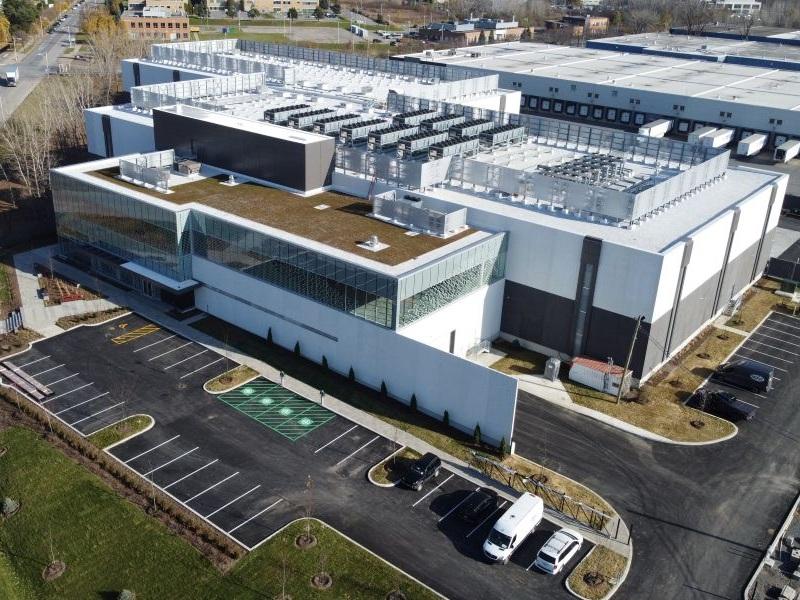
Closer to Canaan’s sector, data centre operator QScale partnered with Énergir Development to add a waste heat recovery system to its campus in Lévis, Que.
Hamilton-based Harvest Systems Inc. has developed a small-scale solution for restaurants to redirect the waste heat from gas-powered appliances toward hot water equipment.


 Industry Events
 Locations