Locations







BrainBox AI has unveiled its new artificial intelligence (AI) innovation lab and showroom in Montreal that showcases its claim that buildings using its technology can see energy savings of up to 30 per cent.
The Trane Technologies-owned company is achieving such results with its AI-driven solutions for tens of thousands of buildings around the world, Riaz Raihan, Trane’s senior vice-president and chief digital officer, said at an event marking the opening of the facility.
Energy supply “is the biggest challenge in the world today,” he said, “and for BrainBox to come in and, without sacrificing comfort, give us that kind of benefit is massive.”
Trane, an HVAC and refrigeration equipment manufacturer based in Ireland that acquired BrainBox AI in early 2025, believes AI represents the greatest opportunity for “smarter, more resilient buildings,” Trane’s chair and CEO Dave Regnery said.
“Buildings use 30 per cent of all the energy produced in the world and 40 per cent of that is for heating and cooling,” Regnery said. Based on hundreds of thousands of energy audits Trane has done, most buildings waste about 30 per cent of the energy their owners pay for.
“That’s the opportunity in front of us,” he said. “We’re going to lead the way to make buildings smarter and more resilient and we’re going to use our agentic AI controls to balance the energy system.”
Finding balance in energy systems
Balancing the energy system is of vital importance, Regnery noted, because utility companies say they don’t need more power; they need more balance. Utility company CEOs have told him that 70 per cent of the time, 50 per cent of power grids don’t run properly.
He added that ARIA, BrainBox’s AI-powered virtual engineer, allows building operators to diagnose what is potentially wrong with building systems much faster than was previously possible. “It takes away the drudgery of the work for technicians, making them more productive,” he said.
Raihan noted that Canada and the U.S. face a massive shortage of technicians over the next several decades. “BrainBox is at the heart of solving that problem.”
"Garbage in, garbage out"

The development of BrainBox’s AI solutions was more complicated than originally thought, as many of the control protocols to operate buildings were developed by companies that no longer exist, Jean-Simon Venne, BrainBox AI president and founder, said.
Another barrier is “garbage in, garbage out,” or false data, such as room sensors that show temperatures of 600 F.
However, BrainBox was eventually able to prove to customers they could achieve significant energy savings in buildings with algorithms working together and with no user complaints about comfort.
Many buildings that are using BrainBox AI applications are operating at greater efficiency levels than what they were originally designed for, Regnery said.
Venne said BrainBox needs to scale its AI technology from tens of thousands of buildings to millions of buildings. Doing so will require algorithms that can self-adapt.
Buildings as batteries
Speaking about the concept of buildings as batteries, Regnery said buildings will soon be able to choose which source of power they use at different times of the day. There may be times when buildings need fossil fuels, other times when it’s optimal to use electricity, and others still when they will need to use energy storage.
“We’re really close to launching these products into the marketplace and the payback on these products is going to be less than four years on a cash basis,” he said. “That would mean it’s accretive on year one on your income statement.”
The result will be a lower carbon footprint “and you’re also going to save the customer a whole bunch of money. This isn’t like pie in the sky anymore.”
“We talk about sustainability all day long, but I would tell you that for something to sell, you need it to be very bottom line-focused for the customer,” Regnery added.
He also scoffed at charges that data centres use too much energy and water. If data centres can help agentic AI eliminate the 30 per cent of wasted energy that people are paying for, it will dwarf the energy data centres consume, Regnery continued.
Real-world results
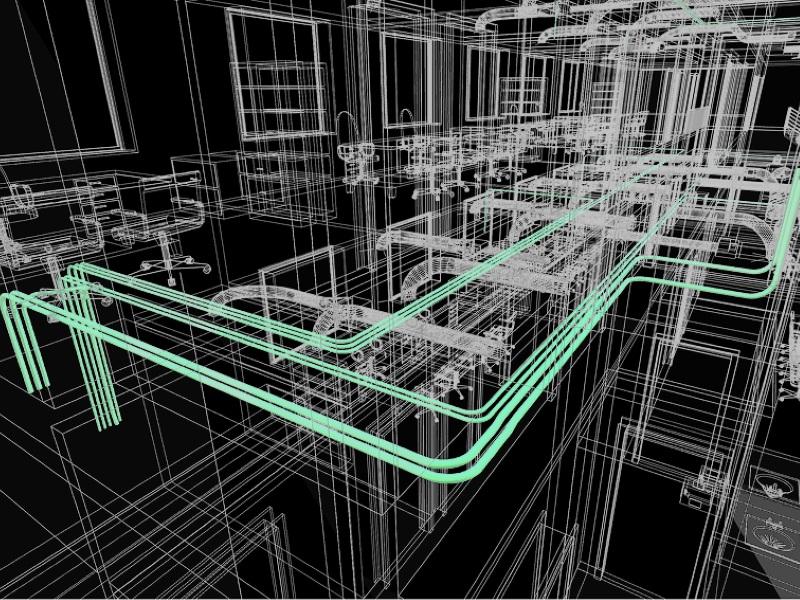
Attendees at the opening also toured the AI showroom that provides an immersive experience to show how BrainBox AI-Trane agentic AI and predictive models can reduce energy costs and lower emissions in buildings.
The showroom contains several real-world case studies. For example, Westcliff Management deployed BrainBox AI technology across 60 per cent of its 509,612-square-foot Galeries de Granby shopping mall in Granby, Que., converting its HVAC system into an autonomous system using AI, cloud computing and a curated set of algorithms.
After one year of operating, there was a 21 per cent reduction in energy consumption and an average 55 per cent reduction in equipment runtime.
In another case, a cheese and dairy manufacturer installed BrainBox’s AI-powered HVAC solution in its 130,000-square-foot Montreal headquarters. In five months, there was an 11 per cent reduction in energy consumption and a 35 per cent decrease in runtime of its air handling unit heating modulation during the winter while maintaining optimal temperatures for employees.
“We want to bring our customers here,” Raihan said of the showroom, “to see it in action, and to talk to the people who built it.”




 Industry Events
 Locations