Locations





GUEST SUBMISSION: In recent years, sustainability conversations in construction have become increasingly sophisticated. We now routinely debate the embodied carbon of concrete mixes, the life-cycle impacts of steel, and the operational efficiency of building envelopes.
These are important discussions, and they have driven meaningful progress, but there is a blind spot that continues to undermine many well-intentioned sustainability strategies: the processes used to assemble buildings.
Buildings account for roughly 13 to 18 per cent of Canada’s greenhouse gas emissions, while embodied carbon from materials and construction activities is estimated to be responsible for between four per cent and 13 per cent of the country’s national emissions. Yet, construction sequencing — the order, coordination and integration of work on site — is rarely treated as a factor in carbon emissions. In practice, however, its impact can be equal to or even greater than that of the materials themselves.
Where hidden carbon really comes from
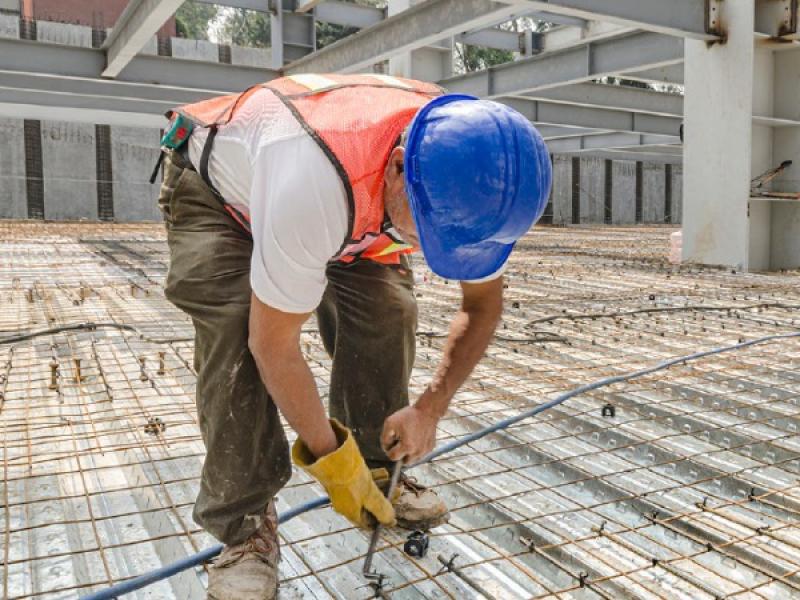
On multiunit residential and mixed-use projects, the most significant sources of “hidden” carbon are rarely dramatic. They are incremental and operational: rework, idle time, inefficient material handling and extended site duration.
Any activity that causes trades to return to the same scope multiple times introduces unnecessary emissions. Late design changes, coordination issues, or access constraints can materially increase carbon through additional labour hours, equipment use, temporary works and material waste.
Inadequate sequencing amplifies the problem by creating cascading inefficiencies. When trades are stacked inefficiently, projects experience increased hoisting cycles, temporary protection, storage and double handling of materials, and extended site durations.
Exterior facade and balcony systems are often particularly exposed because they sit at the interface between structure and interior trades, making them highly sensitive to sequencing decisions. A single sequencing conflict at this interface can ripple across weeks of work.
The result is carbon that was never modelled, never reported and rarely acknowledged — but undeniably emitted.
Why sequencing is missing from sustainability frameworks
Sequencing is rarely explicitly captured in most sustainability frameworks for a simple reason: it is operational rather than prescriptive, which makes it more difficult to standardize, measure and report.
Sustainability frameworks tend to focus on design-stage metrics such as embodied carbon in materials and operational energy performance, typically because these are easier to model and benchmark against established standards.
Sequencing, by contrast, sits within the construction planning and delivery strategy, and requires early, genuine coordination between designers, contractors and specialist suppliers.
As a result, sequencing is often treated as a program risk rather than a sustainability lever, despite its substantial real-world impact on carbon and energy.
In most reporting frameworks, emissions associated with extended site durations, rework, or inefficiencies are aggregated into construction-phase totals, if they are captured at all. This makes sequencing feel intangible — despite its very real impact on carbon, cost and schedule.
The sustainability cost of getting it wrong
When sequencing breaks down, the sustainability cost is the systematic erosion of design intent. A project can be specified with low-carbon materials and strong energy performance targets, but if the delivery strategy relies on multiple installations, temporary solutions, congested work areas, or late-stage redesign, a significant portion of those sustainability gains are effectively erased.
In practical terms, poor sequencing results in higher embodied carbon through additional labour hours, increased factory usage and site energy consumption, excess transportation, and avoidable waste.
For example, even a modest two-week program extension on a typical high-rise project can translate into thousands of litres of additional diesel consumption across cranes, telehandlers and temporary heating. These emissions are rarely captured in formal sustainability reporting, yet they directly undermine the very objectives the project set out to achieve.
Rethinking sequencing through prefabrication
One of the most effective ways to address and reduce carbon from sequencing is through off-site prefabrication.
Prefabrication fundamentally reshapes construction sequencing by shifting labour, assembly and quality control away from congested sites and into controlled factory environments. Work that would traditionally occur sequentially on site can happen in parallel, compressing schedules and reducing exposure to variability.
When building envelope and balcony systems are fully engineered and coordinated upfront, with clear ownership and defined interfaces, programs compress and site complexity drops significantly. Installation occurs in fewer, more predictable cycles, and temporary works and rehandling are minimized.
From a carbon perspective, the benefit is tangible. Reduced site duration means lower energy use, and fewer returns to the same scope means less waste and less equipment time.
Predictable logistics reduce transport inefficiencies and eliminate a substantial amount of “hidden” carbon before construction even begins. This is where some of the most meaningful and scalable sustainability gains can actually be achieved.
Sustainability as a delivery challenge
What consistently emerges across high-performing projects is a strong correlation between sustainability outcomes and early integration.
Projects that consistently perform best — not only on schedule and cost, but also on environmental performance — are those that prioritize genuine collaboration across design, engineering, manufacturing, logistics and installation. Sustainability should be approached as a systems and delivery challenge rather than a materials challenge.
This requires a shift in mindset. Decisions that are often deferred — final interfaces, tolerances, installation sequencing — must be resolved earlier. It also requires accepting that sustainability gains are often unlocked not through new products, but through better planning and clearer ownership.
Making sequencing visible
If the industry is serious about reducing greenhouse gas emissions to achieve net-zero by 2050, sequencing must be brought into the sustainability conversation.
That does not mean adding complexity for its own sake. It means recognizing that delivery strategies shape carbon outcomes just as much as material specifications do, and evaluating how design decisions influence site behaviour, not just operational performance.
As sustainability expectations continue to rise, the question is no longer whether sequencing matters‚ it’s whether we are willing to measure, discuss and design for it — before the carbon is already spent.



 Industry Events
 Locations