Locations







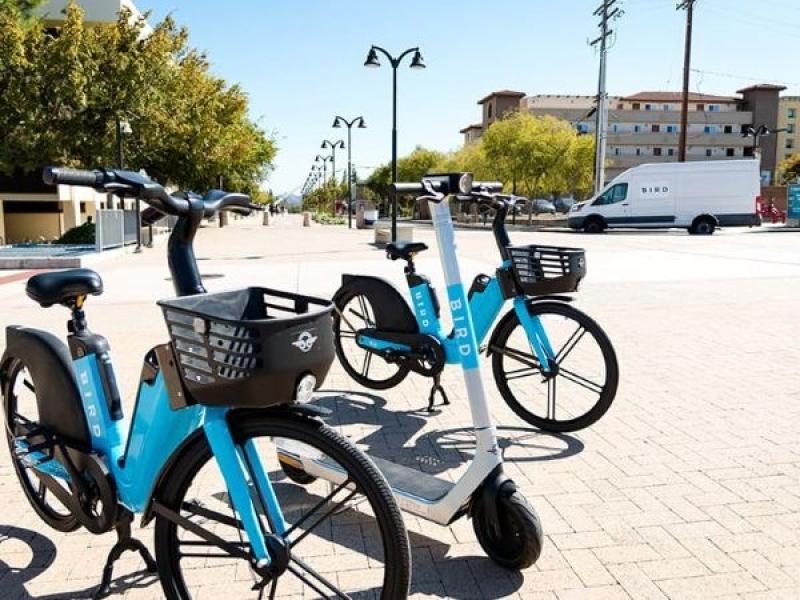
Bird Canada plans to add hundreds of e-bikes and e-scooters across Canada this year in its effort to become a nationwide business, bolstered by increasing interest in sustainable transportation.
The Toronto-based micromobility company aims to expand its battery-powered fleet in Halifax from 300 e-scooters and 300 e-bikes to 750 e-scooters and 600 e-bikes this summer, its general manager of Canada, Texas and Oklahoma Pat Graham said in an interview with Sustainable Biz Canada.
In Calgary, its first market, Bird has set out to boost its e-scooter fleet from 750 to over 1,000 this year. In Edmonton, it plans to go from approximately 850 e-scooters to 1,200.
In March, Bird announced it is setting up shop in Penticton, B.C. as part of a two-year contract to deploy up to 350 e-vehicles in the Okanagan Valley.
By this summer, Bird expects its fleet will number over 10,000 e-scooters and 3,000 e-bikes in more than 25 Canadian municipalities.
“We’re trying to be a national provider. We want to be in as many municipalities as possible and we’re targeting all cities across Canada,” Graham said.
Bird’s nesting grounds
The Okanagan region, he said, has a “great climate for e-scooters” and an active tourism industry, plus many locals interested in its service. Penticton is Bird’s third market in the region, after Vernon and Kamloops.
Halifax is an “awesome market” because of its dense downtown core featuring several universities and hosting a bustling tourism season in the summer, Graham continued.
More Canadians are becoming interested in micromobility because of the rising cost of owning and fuelling a car, he said, on top of greater demand for low-carbon transportation.
Western Canada makes up a significant portion of Bird’s markets, particularly Alberta, where it also operates in Medicine Hat, Red Deer, Lethbridge and Chestermere. In British Columbia, Bird is in Surrey and Cranbrook. Regina and Saskatoon make up the company’s presence in Saskatchewan.
Bird has been spreading its wings in the West because Alberta cities have been pioneers in micromobility pilot programs, Graham said. It allowed for a natural expansion of the company’s hub-and-spoke model, where it anchors the micromobility service around one city and expands to neighbouring municipalities. Calgary, for example, is a hub with Okotoks, Cochrane, Lethbridge and Airdrie as the spokes.
Outside of Western Canada, Bird operates in cities such as Ottawa, Mississauga, Hamilton, Brampton and Oshawa in Ontario; as well as Laval in Greater Montreal.
Since Bird was subject to a reverse takeover in 2023 which resulted in a Canadian business named Third Lane Mobility Inc. owning the global brand, Graham said the company is in a better place. Last year, the company recorded the most rides per year in Canada at 1.75 million, he said, and has remained profitable.
This year, Bird hopes to support over two million rides on its e-bikes and e-scooters.
How Bird works without Toronto, Montreal
Bird looks to be in more Canadian municipalities, Graham said when asked about the company’s expansion plan. From its list of cities, there are two major absences: Toronto and Montreal.
Toronto and Montreal are Canada’s two largest cities, excluding Bird from tens of thousands more potential users. Toronto’s regulations ban e-scooters, complicating plans for Bird. Montreal’s government is piloting motorized personal mobility devices like e-bikes and e-scooters to establish rules.
“We’re hopeful that those two cities would come online one day and that would be a bit of a game changer for our business,” Graham said. “But that is not to say we can’t operate a great business without those cities.”
It may be a matter of time, he said.
“We think this technology is here to stay and it will likely come at some point when regulators catch up.”



 Industry Events
 Locations