Locations






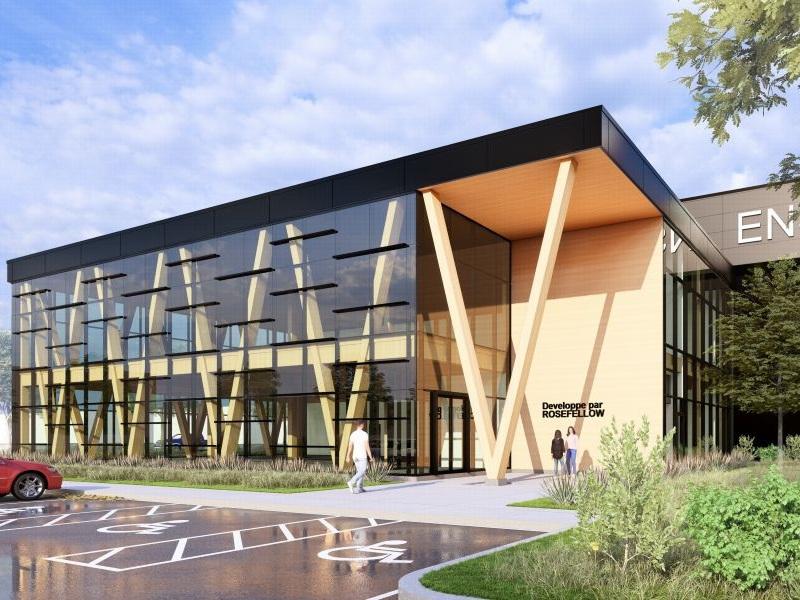
Developer Rosefellow has its first LEED Gold building in the works, a $200-million project off Highway 13 in Laval, Que. which emphasizes energy efficiency and low-carbon design.
The Montreal-based company is redeveloping a 1.2-million-square-foot portion of the Méga Centre Notre-Dame mall. The property, which hosted seven commercial buildings, is being turned into two industrial buildings with a combined leasable area of over 550,000 square feet.
The first building, which represents Phase 1 of the project, is designed to meet the LEED Gold standard and the Canada Green Building Council’s Zero Carbon Building Standards. Rosefellow plans for the building to feature a highly efficient mechanical system, solar power generation and be built partially from mass timber.
The 144,316-square-foot building is intended to consume 34 per cent less energy and produce 49 per cent less greenhouse gas emissions compared to standard industrial buildings in the local market, Mike Jager, co-CEO of Rosefellow, said in an interview with Sustainable Biz Canada.
“There are a lot of these multinational companies that we’ve been doing deals with recently, (that) have their own internal ESG initiatives that they have to respect,” he said, making it appropriate to put sustainability on the forefront.
Many firsts for Rosefellow
Founded in 2019 by former employees of Quebec development firms Montoni Group (where Jager once worked) and Broccolini, Rosefellow is an industrial and multiresidential property developer.
Its project off Highway 13 is joining other sustainable industrial hubs in Quebec, such as Montoni’s Écoparc Châteauguay 30.
“I think people are taking initiative,” Jager said. Developers are recognizing the building sector’s impact on the environment and want to do their part to minimize it, he continued.
LEED grades buildings on environmental performance such as energy efficiency, water savings and how site development was conducted. The Zero Carbon Building Standards recognizes properties that are highly energy-efficient and minimize greenhouse gas emissions from operations and the choice of building materials.
A key decision to meet these standards is framing the building using a hybrid structure, a mix of steel and mass timber. The decision to use mass timber lowers the embodied carbon footprint of the building by 180 tonnes, Jager said. It is the first time Rosefellow is using solid wood in a development, he added.
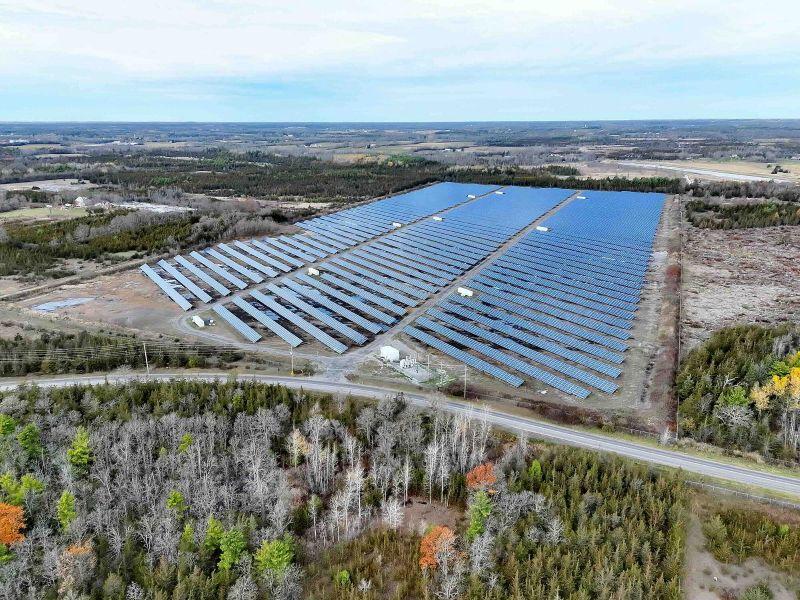
Another first for Rosefellow is solar walls on the facade, which Jager said is possibly a first for Quebec’s industrial sector. The building is also expected to be equipped with solar panels on its green roof. Combined, the solar installation is anticipated to generate 10 per cent of the building’s electricity needs.
“It’s just additional ways that we’re able to give some kind of benefits to the users and occupiers in the building, because these are not savings to Rosefellow,” Jager said, “they’re savings for those occupying the building.”
The energy recovery ventilation units in the building’s mechanical system are expected to be 92 per cent more efficient than the industry standard.
Construction on the building is scheduled to start in June and be finished in Q1 2027.
Sustainability slashes costs, Jager says

Developers like Rosefellow are dealing with international clients that have sustainability commitments, Jager said, making it a priority for its projects.
“There aren’t that many options for tenants today that can find a LEED Gold or (Zero Carbon) building.”
Going green has economic benefits for developers, Jager said. Banks can lend on preferential rates when financing the development of sustainable, low-carbon buildings, and tenants can save on their energy bills.
There is an assumption that the more a building is sustainable, the more it will cost, he said. But when Rosefellow meets with city governments before starting a project, it presents its plan and lays out how sustainability can save money.
For example, cities often expect precast concrete for the construction. Rosefellow tells the municipalities it wants to collaborate on using less carbon-intensive materials.
“So in turn, they’re able to be amendable when it comes to the finishes they expect to see on a building, which reduces our cost on the product,” Jager explained, “which offsets the additional cost to get the certification.”
This, he said, “doesn’t cost us more” or impact the rental rate.
After Phase 1, Rosefellow has plans for a second, larger building of 410,740 square feet that also emphasizes sustainability. Work on the second building is expected to start in the end of summer.
The developer also intends to develop two nearby industrial buildings it hopes will be certified as LEED Silver.
Editor's note: Rosefellow has clarified construction on Phase 2 is anticipated to start in the end of summer 2026, not early 2027.


 Industry Events
 Locations