Locations







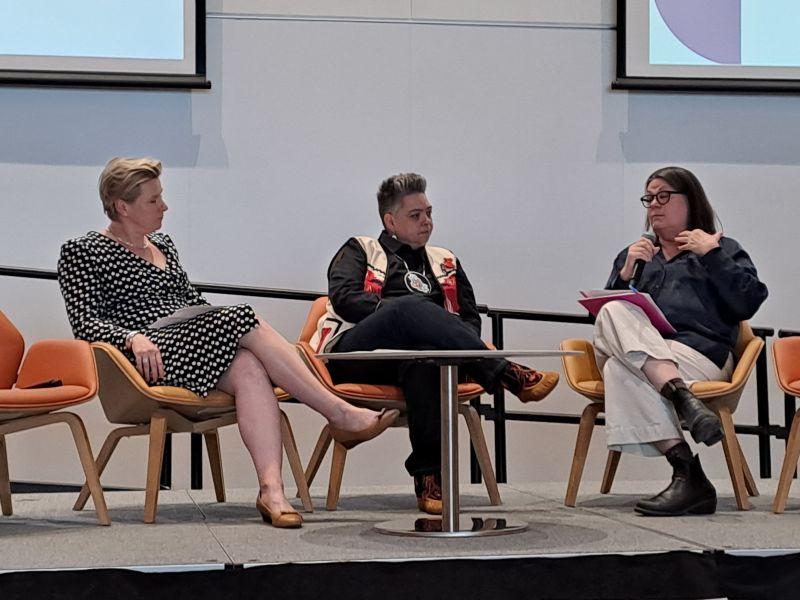
Prime Minister Mark Carney has made ambitious energy and infrastructure projects a cornerstone of his nation-building agenda. Panels at Toronto Climate Week (TOCW) laid out how this can be achieved with Indigenous interests, nature and decarbonization in mind.
Regulatory barriers to rapidly building projects should be addressed, participants in two different panels said.
Eric Muller, the Canadian Renewable Energy Association’s director of policy for Ontario, listed the obstacles: “There’s permitting, there’s siting and there’s community support, and there’s partnerships, there’s NIMBYism.”
Indigenous Canadians are eager to have financial stakes in clean energy and electricity transmission developments, noted Kwatuuma Cole Sayers, the executive director of the Indigenous Power Coalition.
“If Canada is accelerating nation-building, it must also accelerate nature-building,” Irena Creed, a wetland and watershed ecosystem scientist and professor at the University of Toronto’s Scarborough campus, said.
Canada needs to build fast
During a panel on investment in the climate sector titled The Great Reallocation, Jan Mahrt-Smith, an associate professor of finance at the University of Toronto's Rotman School of Management, said there are “great opportunities” in sustainable finance, but there should be less talk about “how we’re all going to get rich when we solve climate change in our Canadian way.”
What is best for an individual, a city or a country may not be the best for the world, he explained. It is only by confronting this idea that Canada can unleash its potential.
Mahrt-Smith identified a need for more blended finance – public or philanthropic funding mixed with private capital – in sustainable finance to support the energy transition.
“We really need to think about how to scale that up, and ensure that blended finance works,” he said, giving agricultural finance as an example.
Panel moderator Sandra Odendahl, a strategic advisor to Catalyst Climate Capital, asked the panel what they saw holding Canada back from leading in sustainable finance.
“We are so busy debating whether we should build something instead of just how fast we build it,” Nelson Switzer, a managing partner and co-founder of Climate Innovation Capital, answered. Canada could break down the interprovincial barriers preventing it from moving quickly on major infrastructure, he suggested.
Indigenous Canadians interested in transmission projects
On a following panel, From Emissions Reductions to Economic Advantage, is where Muller concurred with Switzer. While the stage is set for renewables development to surge in Canada, he said the sector is facing roadblocks from permitting and siting rules, community approvals and NIMBYs who jam up projects.
Obtaining social license and community acceptance are key to bypass these hurdles, Muller said. The sector also needs good developers and projects, communities being involved before the projects are proposed, and collaboration with Indigenous partners.
Also, the renewables sector requires transmission lines and a steady, predictable pace of procurements backed with consistent rules for safe investments, Muller said.
Carney’s plan to link Canada’s grids with new and expanded transmission lines will inevitably cross First Nations territories, Sayers said. Those Indigenous Canadians will likely want equity stakes and to take action on the developments, he continued.
Sayers is hearing from more First Nations that they “don’t want a prescriptive equity framework that exists in Canada” for the transmission lines.
First Nations, he said, are not content with being passive equity owners, and aspire to be project leaders with the authority to make informed decisions and have greater governance over the developments sitting on their lands.
Nature is foundational to Canadian economy
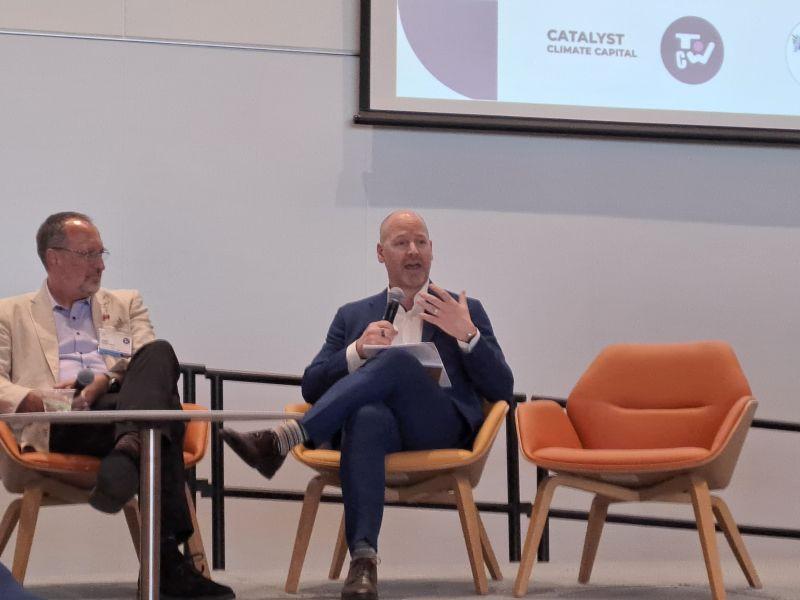
Amid the plans to build out more energy infrastructure, panellists at the Nature as Infrastructure session emphasized the importance of protecting nature to preserve its vital role in the economy and society.
“Nature is not separate from the economy. Nature is the foundation of the economy,” Creed said. Forests regulate the climate, wetlands control flooding and watersheds filter water, for example.
Nature helped build Canada’s economic prosperity, Creed continued, but climate change is disrupting the relationship. The wildfire that incinerated Fort McMurray and caused billions of dollars in damages was referenced.
Valérie Courtois, the executive director of the Indigenous Leadership Initiative, noted how wildfire evacuations are disproportionately impacting Indigenous Canadians. One-in-seven First Nations were evacuated due to wildfires in 2025, she said. Yet a sliver of wildfire funding is going to Indigenous communities.
Risk management, Courtois said, is the “best sweet spot” between Indigenous knowledge and science when it comes to resilience. Modern planning practices have a fixation on optimization, she explained, but not managing risk, which Indigenous Canadians have been doing for millennia.
“What we miss is the execution of bringing that knowledge into real-world decision-making, and who decides that.”
Indigenous Canadians must be engaged in the decision-making process for nature, Creed said. Canada also needs nation-building “that values the natural capital” and understands it is foundational for the country’s economic prosperity.




 Industry Events
 Locations