


 Locations

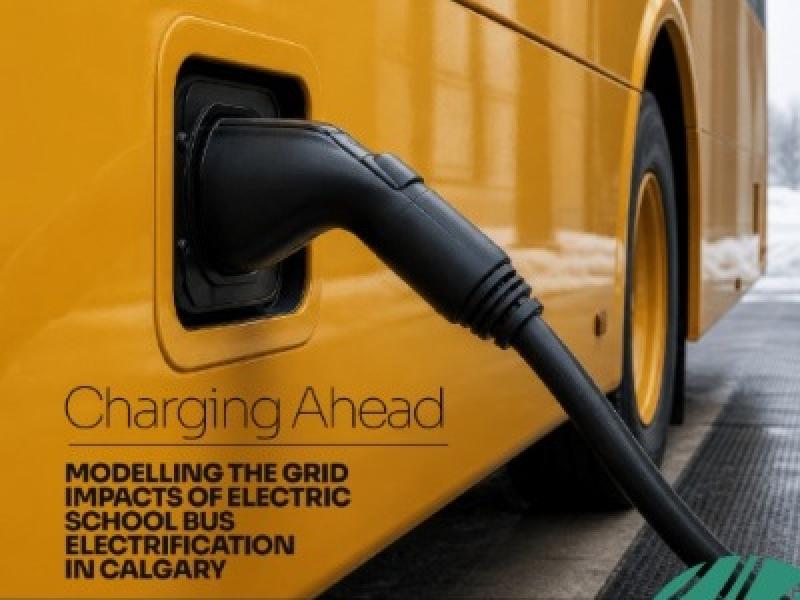





The biggest challenge to widespread adoption of electric school buses may not be the additional electricity they require, but where and when they are charged, according to a new Pollution Probe report.
Released Wednesday morning, Charging Ahead examines how electric school bus adoption could affect Calgary’s grid through 2040. Modelling different adoption scenarios, the Toronto-based non-profit found the city’s grid could accommodate hundreds of electric school buses without significant strain.
The bigger obstacle to a smooth, affordable transition, however, could be the location of charging depots and the timing of charging. The depots would be concentrated in some communities, demanding upgrades to the local electricity infrastructure such as transformer replacements.
It is critical that utilities, fleet operators and governments take proactive action to ensure a smooth transition to battery-powered school buses, Marc Saleh, director of transportation at Pollution Probe, said in an interview with Sustainable Biz Canada. If not, utilities could be on the hook for millions of dollars more in costs.
“The goal with the study was really to lay the ground on: this is the work that we need to start doing for utilities to be aware of where the loads will be and how to plan for it,” Saleh said.
Infrastructure distribution the key
For the report, Pollution Probe modelled a base scenario with gradual adoption of electric school buses and an aggressive scenario with rapid uptake. Under the base scenario, Calgary would have 168 electric school buses on its roads by 2040, compared with nearly 500 under the aggressive scenario.
By 2040, annual electricity demand reaches approximately 4.2 gigawatt-hours (gW-h) under the base scenario and 12.3 gW-h under the aggressive scenario. The two forecasts do not represent “a number that is scary” to the city’s projected electricity demand, Saleh said.
However, the transition would not be without challenges. “The concern is more on the infrastructure for the distribution than having an extra power plant to generate electricity,” Saleh said, as charging demand is highly time- and location-dependent. Because charging would be concentrated at a handful of depots, even moderate overall demand could place localized strain on transformers and feeders, the report states.
If charging is left unmanaged, the peaks may exceed local capacity at individual depots, particularly where multiple routes are co-located.
Without addressing this problem, “everything gets more expensive,” Saleh said. A utility unprepared for an influx of electric school buses could face costly infrastructure upgrades to accommodate the additional demand. The owner of a charging depot could face costs ranging from hundreds of thousands to millions of dollars for certain components.
Another challenge is that Calgary's long-term electricity planning does not yet account for demand from electric school buses. Thus, utilities lack a clear picture of where and when charging demand will emerge, a problem when major infrastructure upgrades can take years to complete. Without early coordination, Pollution Probe says electrification increases the likelihood of delayed and higher-cost infrastructure deployment.
Charging management, coordinated planning recommended

Pollution Probe laid out a series of recommendations to stakeholders to ensure a smooth transition to electric school buses.
Utilities are urged to start communicating with fleet operators years in advance when planning for charging infrastructure. If a fleet operator today wants charging infrastructure, they call the utility and lay out a plan that they pay for, Saleh said. “But over time, we can’t have the fleets call in every time and pay for the upgrades themselves,” he continued. “That cost will have to be shared in some way with the utility.”
Fleet operators can reduce peak demand by staggering their charging to certain windows, rather than all at once. This reduces peak power demand on the fleet’s side, Saleh explained, which makes it easier for utilities to manage the surge in demand and lowers costs for the fleet operator.
Governments could work to better understand the cost of grid upgrades and consider those in their policies and incentives. This, Saleh said, justifies the case for consistent policy, as it allows utilities to plan for grid upgrades in cost-effective way.
Although the report focuses on Calgary, Saleh said its findings could be relevant anywhere in Canada.





 Industry Events
 Locations

