


 Locations

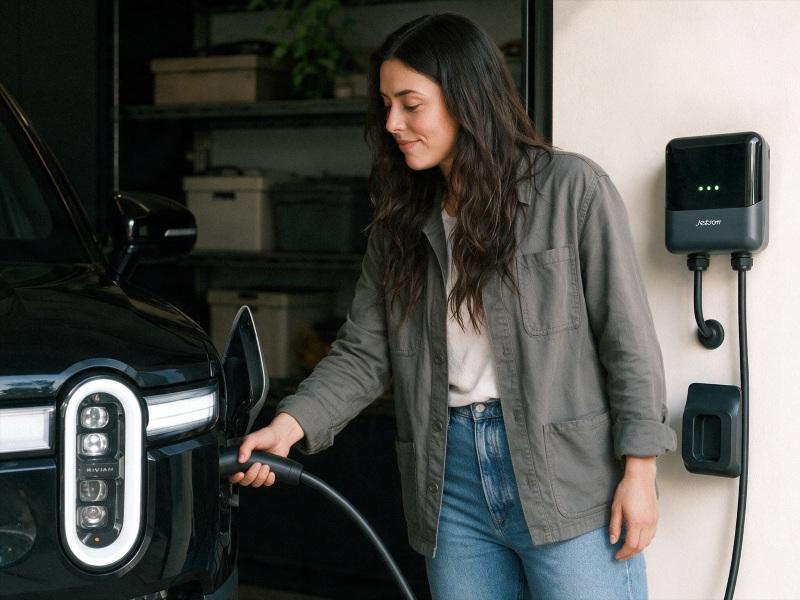





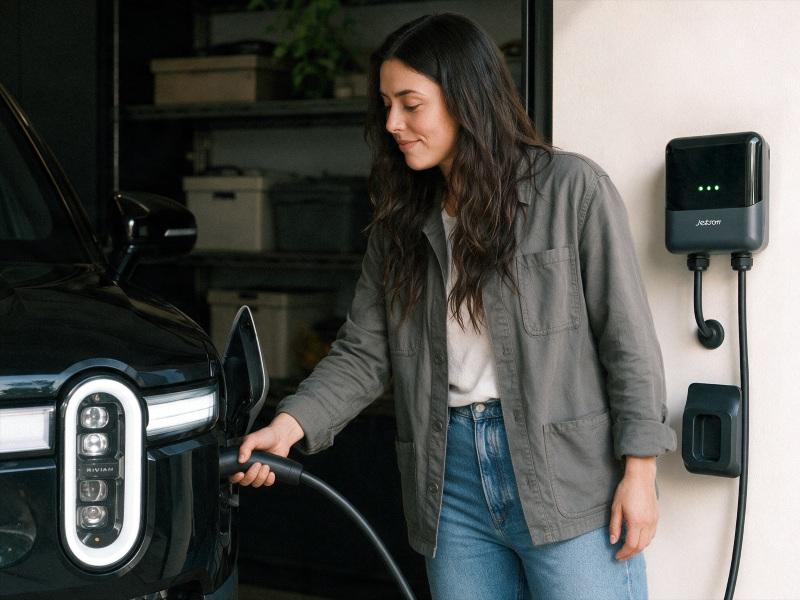
Vancouver-based Jetson Home is expanding its home electrification offerings with a heat-pump water heater and an electric vehicle (EV) charger, adding two products designed to help homeowners cut energy costs and carbon emissions.
Available in 50-, 65- and 80-gallon models, Jetson Water heats water by transferring heat from the surrounding air into the tank, rather than using an electric element or gas burner.
Jetson Charge is a 240-volt EV charger with a North American Charging Standard (NACS) connector that can add approximately 48 to 72 kilometres of driving range per hour of charging, the company says.
The two appliances complement Jetson Air, its flagship central heat-pump system for home heating and cooling.
Jetson’s Water and Charge are “important in helping homeowners on that journey of electrifying and upgrading their home,” Stephen Lake, CEO and co-founder of Jetson, said in an interview with Sustainable Biz Canada.
Higher efficiency, lower costs
Lake said both appliances can reduce household energy costs through greater efficiency.
Jetson Water is up to four times as energy-efficient as a conventional electric water heater and costs approximately 70 per cent less to operate, he said.
Charge can support homes with 100-amp service, so homeowners can install an EV charger while avoiding costly panel upgrades that often run in the thousands of dollars. Charge also connects to Jetson Energy Monitor, which is expected to gain a load-management feature that automatically adjusts charging speeds to balance the home's electricity demand.
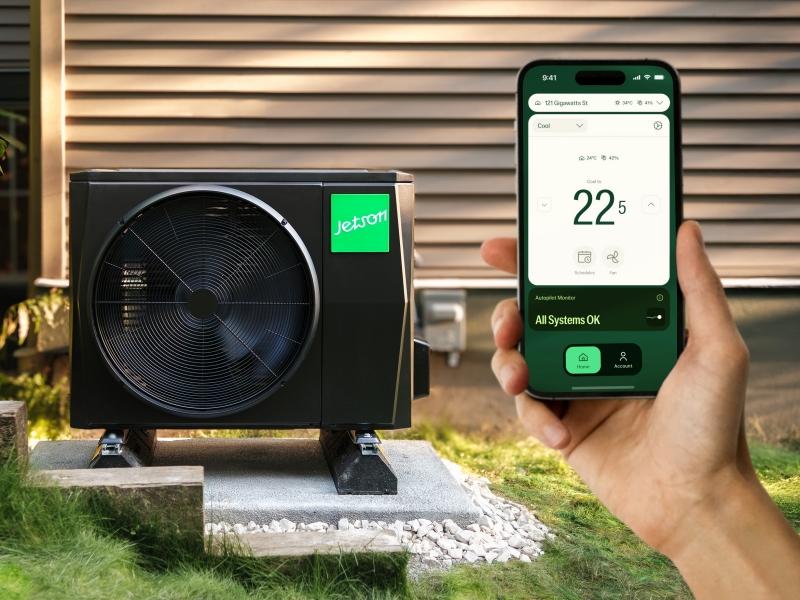
All three of Jetson’s products connect to the Energy Monitor, an app which opens “one really clear single view” of home energy use, Lake said. The app keeps track of the appliances’ performance and adjusts settings to improve energy efficiency. Homeowners can check and adjust temperatures and save energy while away. Energy Monitor also allows Jetson Charge owners to start, stop and schedule charging remotely.
For further savings, Jetson offers instant online quotes that identify available incentives and rebates. The company handles the permitting, system design and installation, avoiding “the markup and middleman that traditionally contractors have,” Lake said.
Jetson Water and Air run on electricity, disconnecting homes from natural gas-powered home-heating and water-heating equipment. Space and water heating accounted for more than 80 per cent of energy use in Canadian homes in 2019, making these systems a significant target for emissions reductions.
The company is offering Water and Charge in its Canadian and U.S. markets, targeting primarily single-family homes and townhomes. Buyers can pick and choose between the three appliances, Lake said.
The future is heat pumps, CEO says
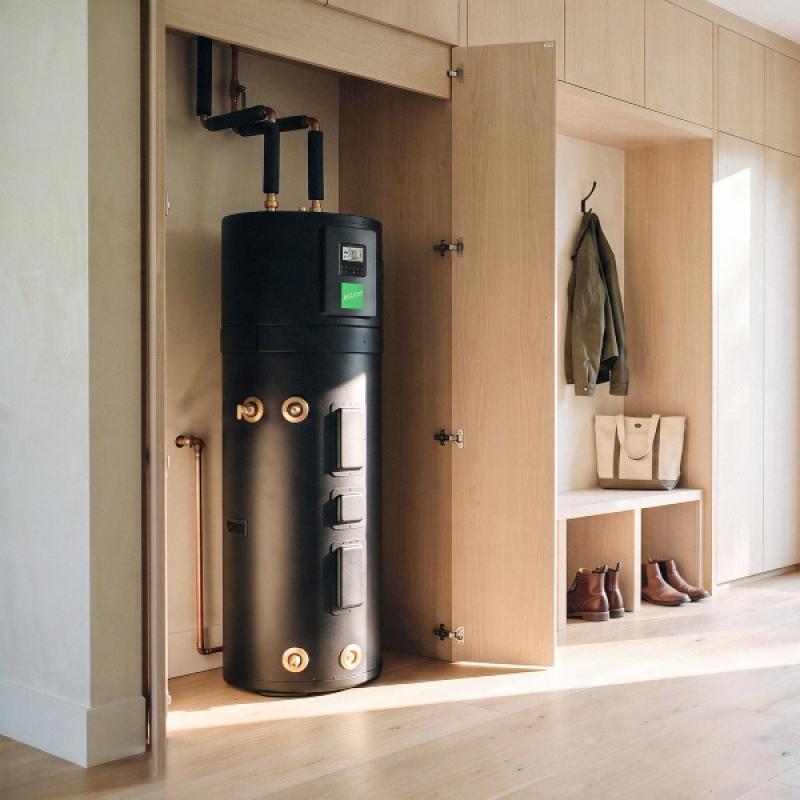
Jetson initiated development of Water because of “significant demand” for heat-pump water heaters since Air was released, Lake said.
Jetson's experience reflects a broader rise in heat-pump adoption in Canada and the U.S. The share of Canadian households with a primary heating system using heat pumps rose from three per cent in 2013 to nine per cent a decade later. In the U.S., heat-pump sales nearly matched those of conventional air conditioners in 2025.
Adoption of heat pumps increased because of the stability of electricity prices compared to fossil fuels and government incentives such as rebates. The Canadian government announced a $2-billion program for heat pump rebates this month to further stimulate heat pump adoption. Lake believes it would be a “huge accelerant” for heat pump adoption in the country.
“If you’re gonna make that replacement, it’s clearly where the future’s going,” he said.
Earlier in October, Jetson entered the Nashville market. The city makes an excellent market because it is a leader in heat pump deployment, Lake said, but many are older and inefficient, giving the company an opportunity to replace those with modern, superior versions.
Markets such as Nashville may have reached a tipping point in heat-pump adoption, Lake said, as more homeowners see neighbours using the systems successfully through winter and hear about potential energy-bill savings and improved comfort.
Jetson plans to expand its Canadian presence, though Lake would not disclose specific provinces or territories it is considering.


 Industry Events
 Locations

