


 Locations



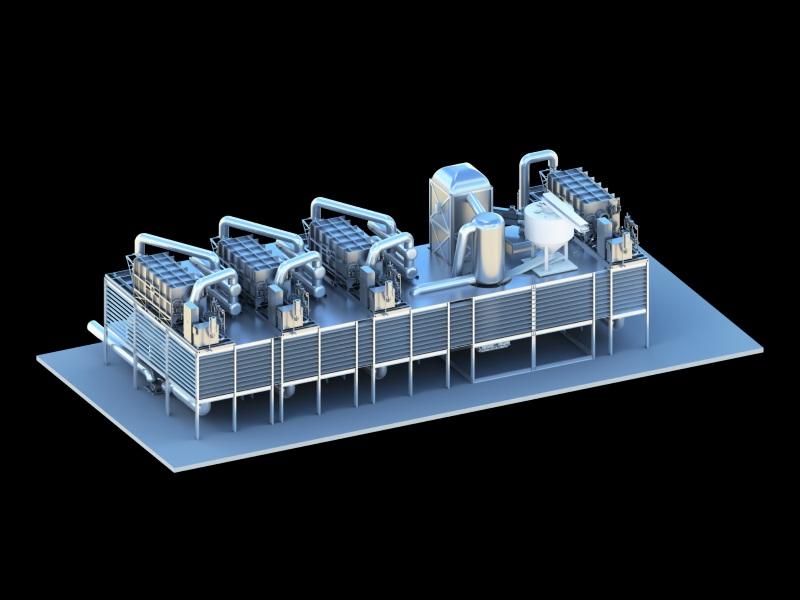
UPDATED: French renewable fuels company Haffner Energy has formed a Canadian joint venture with Mundi Énergies, with a plan for a five-megawatt (MW) biofuel pilot project in Quebec as its first development.
Announced last week, Vitry-le-François-based Haffner Energies and Manseau, Que.-based Mundi will deploy Haffner Energy’s biofuel production technology for the pilot. Haffner expects to generate 4.2 million euros from the project in equipment and service sales.
The joint venture will market Haffner Energy’s technology, manufacture most of the equipment, and develop and operate the facilities with the participation of a network of Canadian farmer co-shareholders, according to a release published Dec. 12. The joint venture will hold an exclusive license for Haffner Energy’s technology in Canada (excluding certain areas of application).
Mundi Capital, a management company affiliated with Mundi Énergies, will own 51 per cent of the joint venture, and the remaining 49 per cent is to be owned by Haffner Energy.
"With this partnership in the heart of North America, we are entering a new dimension,” Philippe Haffner, president and CEO of Haffner Energy, said in the announcement.
Joint venture’s plan for more projects
The plan is to have the pilot be the first step in a strategy to develop dozens of biofuel facilities across Canada. The two companies announced Friday morning the intent is to deploy 20 hubs in Quebec, then develop more of the assets across the country. The first three hubs are expected to be launched as early as 2026.
The capacity of the five MW pilot will be approximately one quarter of future projects, which will be based on Haffner Energy’s 20 MW SYNOCA units that can produce renewable synthetic gas using biomass. The synthetic gas, or syngas, can replace fossil fuel gas with a neutral to negative carbon footprint, Haffner Energy says.
The goal with the facilities is to decarbonize the agriculture and forestry sectors with renewable natural gas injected into local gas networks. Technologies such as Haffner Energy's biomass thermolysis and renewable energy generation such as solar power are expected to be in the facilities.
The projects will strengthen “Canada's sustainable energy sovereignty,” and create “a socio-economic model where every farmer and every community benefits directly from the economic impacts of each project," Sylvain Perreault, founder and president of Mundi, said in Friday’s announcement.
About Haffner Energy, Mundi
A family business that started with cogeneration energy optimization projects at thermal power plants in 1993, Haffner Energy switched its focus to the biofuel sector in 2000.
Its technologies can produce syngas, sustainable aviation fuel (SAF), hydrogen and methanol from biomass, providing a renewable source of fuels for transportation and heavy industries. The fuel production generates biochar, which functions as a carbon sink.
Haffner Energy has offices in Paris, Nantes and Houston.
In 2025, the company struck a number of deals and unveiled technological developments.
In January, it inked a partnership with Illinois-based LanzaTech and LanzaJet to explore biomass-to-SAF projects. A month later, Haffner Energy announced it commissioned the world’s first facility producing hydrogen from solid biomass at its site in Marolles, France.
In March, Haffner Energy announced it signed a contract with H2 bois to develop a biomass-based hydrogen, electricity and biochar production facility in Switzerland.
In September, Haffner Energy forged a 15-year SAF offtake agreement with Luxaviation Group, an operator in the business aviation sector. In November, it was announced OroCarbo selected Haffner Energy’s SYNOCA for use in a biomethanol project in California.
Mundi is a sister company of Machinerie Dubois, an agricultural equipment company based in Manseau, Que.
Editor’s note: The article has been updated with the name of Haffner Energy’s partner and plans for the joint venture.


 Industry Events
 Locations
