
 Locations




Diverso Energy will bring its utility geothermal model to developers of new lowrise communities in the U.S. with partner Dandelion Energy, widening the Toronto-based company’s reach outside of Canada.
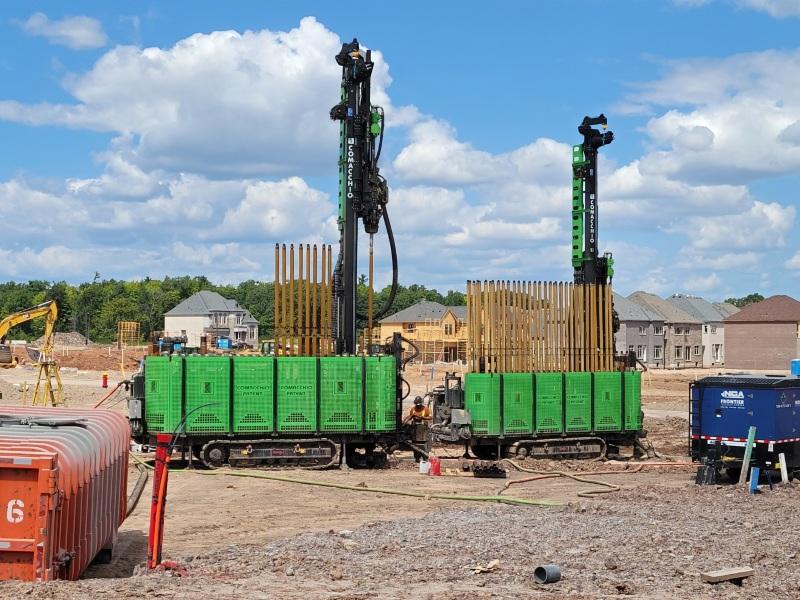
Diverso’s energy-as-a-service (EaaS) platform and capital will be provided to Arlington, Va.-based Dandelion, which will focus on designing, drilling and installing the geothermal heating and cooling systems.
Dandelion is likely the largest residential geothermal provider in the U.S., Diverso’s CEO Tim Weber said in an interview with Sustainable Biz Canada. To date, Dandelion has installed almost 4,000 heat pumps and services single-family and multifamily housing, plus commercial and municipal buildings.
Weber called the partnership “really the perfect marriage.” It overcomes the obstacles to adoption of geothermal technology in homes, he added. Only approximately one per cent of U.S. homes have geothermal heat pumps, U.S. federal data shows.
While best known for servicing large multifamily buildings in Ontario such as Yonge & Roselawn in Toronto, 2444 Eglinton Ave. E in Scarborough and CAVO Condos in Oakville, Diverso began branching into the lowrise space by partnering with Mattamy Homes in 2025.
Today, Diverso services over 30 multifamily buildings and over 1,000 lowrise homes in Ontario.
The seeds of Dandelion
Dandelion was fostered in Google’s business incubator until it was spun out in 2017. Weber met its current president Kathy Hannun before she helped found the company.
When Weber heard consumer clean energy tax credits in the U.S. were being phased out due to the One Big Beautiful Bill Act, impacting Dandelion’s home retrofit business, he pitched Diverso’s EaaS model to Hannun as way to take advantage of the corporate tax credits which were not as dramatically curtailed.
The Greater Toronto and Hamilton Area remains Diverso’s core market, Weber said, but the Dandelion opportunity was “perfect timing” to expand into the U.S. The company had been considering it for some time, but needed the right opportunity.
Partnering with Dandelion “allows us to expand our core business into the U.S. without the need to have extensive construction boots on the ground,” he said.
Dandelion accessing Diverso’s EaaS
Dandelion previously operated under a direct-to-homeowner contracting model. Over the past two years, it partnered with homebuilders in the U.S. and is now adopting Diverso’s EaaS model to deploy in new markets.
Similar to paying for a utility, Diverso will own the geothermal borefield and heat pump in a home while the homeowner will pay a monthly fee to heat and cool their property.
Additionally, Diverso will provide its operational platform which includes billing, administration and customer service.
Weber would not disclose how much capital Dandelion could access to finance more geothermal installations, but noted access to financing will likely “never be a limiting factor” because Diverso is majority owned by multibillion-dollar infrastructure fund CVC DIF.
The two geothermal companies are targeting three to four U.S. states as the first markets for the partnership, based on factors such as the housing markets, drilling conditions and state policies, Weber said.
While the specific states have yet to be decided, the mountainous Western U.S. and the mid-Atlantic coast area are strong candidates, he noted.
The benefits of EaaS

Diverso’s model overcomes the barriers of fragmented project delivery models and cost premiums common in the industry, Weber noted. It enables dozens of projects to be undertaken at once, providing economy of scale.
Developers can stand out in a crowded, competitive market with the partnership, he said, as it is a zero-cost option to build fully electrified communities with no natural gas heating equipment.
Homeowners will benefit because a geothermal system eliminates the outdoor air conditioner unit in the backyard, Weber said, opening the space for other uses.
Despite the current political climate against low-carbon energy, geothermal offers “more comfort, more resilience,” Weber said, emphasizing its strengths outside of decarbonization. “It’s safer, it’s quieter, it provides a superior outdoor experience, just a superior experience overall for the homeowner at zero cost.”
Weber is seeing more municipalities pushing lowrise developers beyond business-as-usual standards, which incentivizes adoption of low-carbon technologies.
“This is a great opportunity for developers to leverage this model and go above and beyond for the municipalities without impacting home purchase prices.”
In Canada, federal initiatives such as the Canada Mortgage and Housing Corporation’s preferred financing program have “aggressive” energy and carbon targets, which makes geothermal “an obvious choice to meet those new targets,” Weber said.
Diverso will likely not be expanding to new markets any time soon in Ontario or the U.S. following the Dandelion partnership, he said, and will focus on growth and volume.



 Industry Events
 Locations