Locations



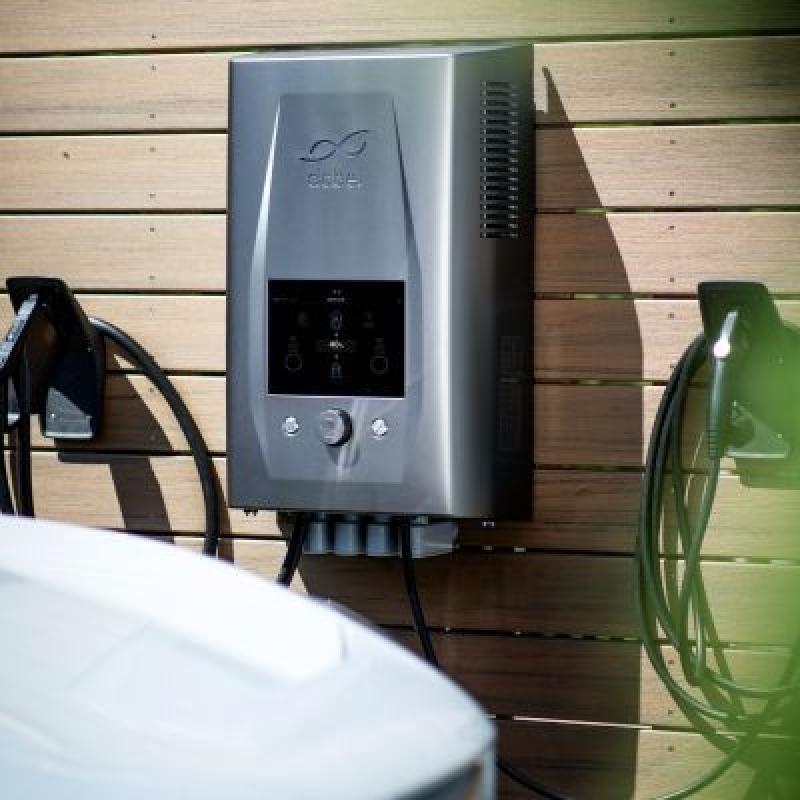
dcbel Inc. has entered the Quebec market, introducing its sustainable home energy system to its home province and Canada for the first time.
After years of abundant clean power, Quebec’s grid is facing the pressure of the transition from fossil fuels to electricity and development of energy-hungry data centres. The province’s utility, Hydro-Quebec, has asked businesses to help manage demand, a role dcbel believes it can meet.
“I think now it was just appropriate,” Marc-André Forget, the CEO of the Montreal-based company, said in an interview with Sustainable Biz Canada.
The company’s flagship product is named Ara. Homeowners can tie together their electric vehicle (EV) and charger, battery storage, rooftop solar panels and public grid connection for a variety of actions.
With Ara, homeowners can can charge their home’s battery or EV when electricity rates are low and discharge the batteries at peak hours, saving on energy bills. The power can also be distributed to the grid at periods of high demand, generating revenue for the homeowner.
Why dcbel chose Quebec
Though headquartered in Montreal, dcbel’s main market for years has been California. The sunny state has the right conditions for Ara, Forget said, being a competitive market for solar with high energy costs for residents on top of frequent blackouts and outages.
The push for electrification in Quebec, Hydro-Quebec’s support for home solar installations and the size of the province made a compelling argument for deploying in dcbel’s home province. Plus, it has access to a network of trades such as electricians and solar panel installers in Quebec, Forget noted.
Deployment of Ara will be dcbel’s focus in Quebec. The system is well-suited for the suburbs of Montreal and Quebec City and the Eastern Townships, Forget said.
Collaboration with Hydro-Quebec is key to dcbel’s presence in Quebec. The company worked to ensure Ara is eligible to be funded by the provincial utility’s new grant program subsidizing home solar installations, Forget said.
It is also critical to partner up in order to prevent the potential problems from hundreds of systems like Ara connecting to Quebec’s grid.
“It’s important that the arrival of such a product in a grid like Hydro-Quebec does not create more harm than good,” Forget said. If Ara systems inject electricity when the grid is at a surplus of power, it could lead to problems. Working with the utility to understand when it needs power will help relieve stress on the grid, Forget explained.
The company has received many reservations for Ara in Quebec, Forget said, enough to demand a ramping up of its manufacturing. “I was very surprised how many reservations we got in the first early days.”
Quebec will also serve as a place for dcbel to install new technologies and test new ideas near its engineering centres.
dcbel’s expansion
After Quebec, dcbel has more Canadian provinces in mind for expansion of Ara. Nova Scotia and New Brunswick are strong candidates, Forget said, as are Alberta, Ontario and British Columbia.
In the U.S., dcbel plans to enter Texas, Florida, Maryland, and the Carolinas. Across the Atlantic in Europe, France and the U.K. are targets for the company.
In an interview with Sustainable Biz Canada in 2025, Forget said his goal was to make dcbel “a very boring company in the next couple of quarters,” with a focus on execution, shipping and boosting manufacturing.
The company is “still as boring as we used to be,” he said one year later, concentrating on scaling up its manufacturing and delivery capabilities.
For example, dcbel plans to open a new manufacturing line outside of Canada to complement its factory in Quebec. There has been good progress on its plans for manufacturing in the U.S. and Europe.
Forget is also keeping a close watch on how CUSMA trade negotiations develop, as it would have a substantial effect on its manufacturing strategy.
“We will manufacture in every continent we deliver,” Forget said about dcbel’s ambition.


 Industry Events
 Locations