
 Locations



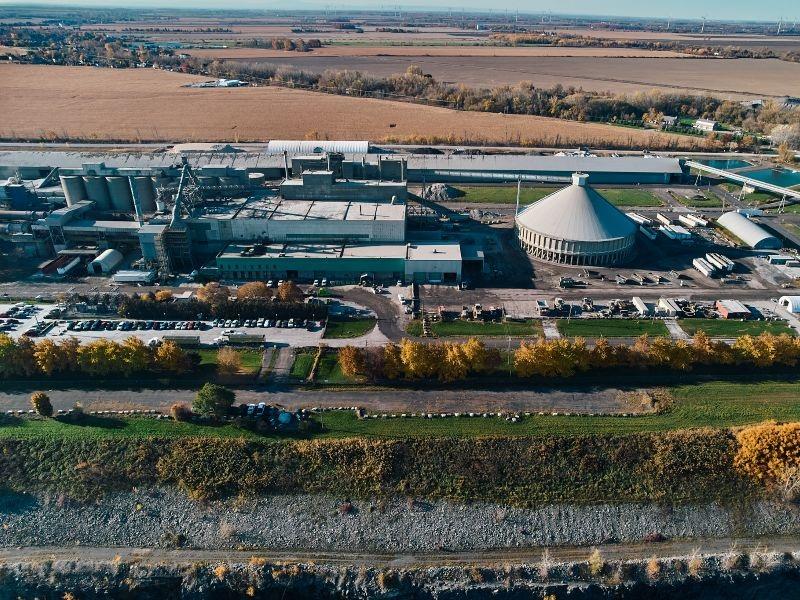
A $610-million investment by Amrize to upgrade its Saint-Constant, Que. cement factory is expected to result in cement with the lowest carbon emissions per tonne in Eastern Canada.
The modernization of the facility, located south of Montreal across the St. Lawrence River, is to replace two kiln lines with one that can produce the same amount of clinker as the two.
The energy efficiency boost is expected to result in 30 per cent less carbon emissions per tonne of cement, and over 40 per cent by 2035.
“The Saint-Constant modernization project is in reality a sustainability initiative that we’re pursuing,” Daniel Vadacchino, the manager of the Saint-Constant cement plant, said in an interview with Sustainable Biz Canada. “The main objective is to decrease our carbon footprint and to start working towards net-zero,” which it is aiming to reach by 2050.
Spun out of Lafarge in 2025 to focus on North American operations, Amrize is a building materials manufacturer headquartered in Chicago. The company produces cement, concrete, asphalt, aggregates and building envelope products.
Amrize owns five Canadian cement facilities that produce eight million to 10 million tonnes per year, Vadacchino said. The Saint-Constant factory outputs 800,000 to one million tonnes of cement per year.
Updating the Saint-Constant factory
Lafarge started operations of the Saint-Constant plant in 1967. Amrize looked at the factory’s assets and saw many were over 50 years old, Vadacchino said. Amrize’s board decided the factory’s equipment needed modernization.
The company is installing a modern kiln line with a preheater, precalciner tower and new tooling system, as well as a new vertical raw mill to feed the kiln. The new line is to turn ground limestone and additives into clinker in a shorter time compared to the older lines.
“It’s really a complete new production line for clinker, which is the first step of transformation to produce cement,” Vadacchino said.
The effort is planned to expand the plant’s production capacity by 300,000 tonnes of cement per year to 1.2 million tonnes per year.
The new line is designed to consume the same amount of fuel as the two older lines while outputting 30 per cent more clinker. By demanding less fuels such as natural gas and petroleum coke, it would result in an approximately 30 per cent cut to carbon emissions, Vadacchino said.
With further optimizations planned to take place, Amrize anticipates the net carbon emission reduction to hit over 40 per cent by 2035.
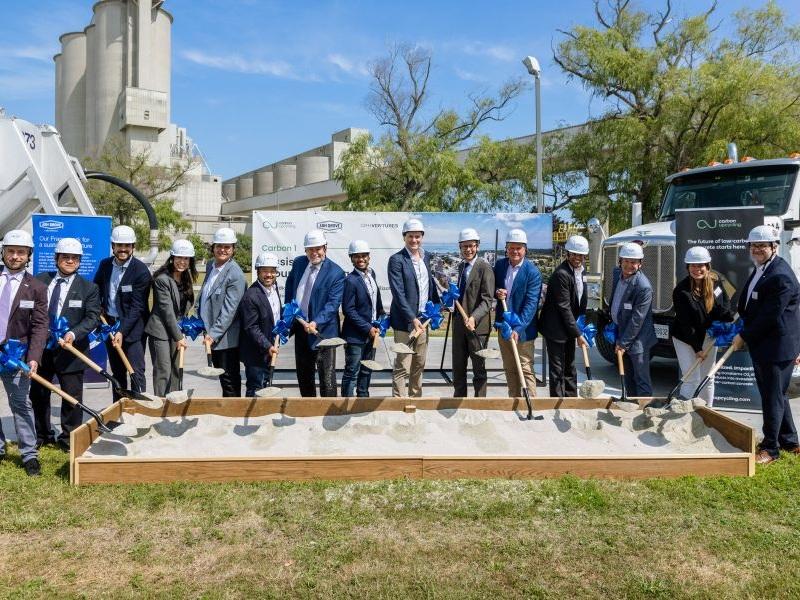
The modernization project is scheduled to take two years to complete, with the groundbreaking starting in June. The factory’s new line is expected to begin operating in the fall of 2028.
Additionally, Amrize is adding another cement storage site at the Saint-Constant factory with the modernization. Amrize currently relies on terminals in the east end of Montreal, so the new storage site would reduce the hauling and accompanying carbon emissions from transportation, Vadacchino said.
The federal and Quebec governments are funding Amrize's project through the Low-Carbon Economy Fund, the ÉcoPerformance program and the Support Measure for the Decarbonization of the Industrial Sector.
Taking on a difficult-to-abate industry
Modernizing the Saint-Constant plant factors into Amrize’s quest to meet its 2050 net-zero target.
In its 2025 non-financial matters report, Amrize said its roadmap to meet its climate goal includes production of low-carbon cement blends, increased use of alternative raw materials and fuels, increased use of renewable energy, and investment into innovation.
From 2024 to 2025, Amrize reported small decreases in the carbon footprint of its operations, electricity consumption and production of cementitious materials.
The cement and concrete industry is one of the world’s largest sources of carbon emissions. It is considered one of the most difficult to decarbonize due to the industrial processes and materials that heavily rely on fossil fuels.
Companies like Amrize are attempting to take on the problem with energy efficiency. Others are developing the use of lower-carbon cement substitutes and carbon capture and sequestration technology.


 Industry Events
 Locations