
 Locations

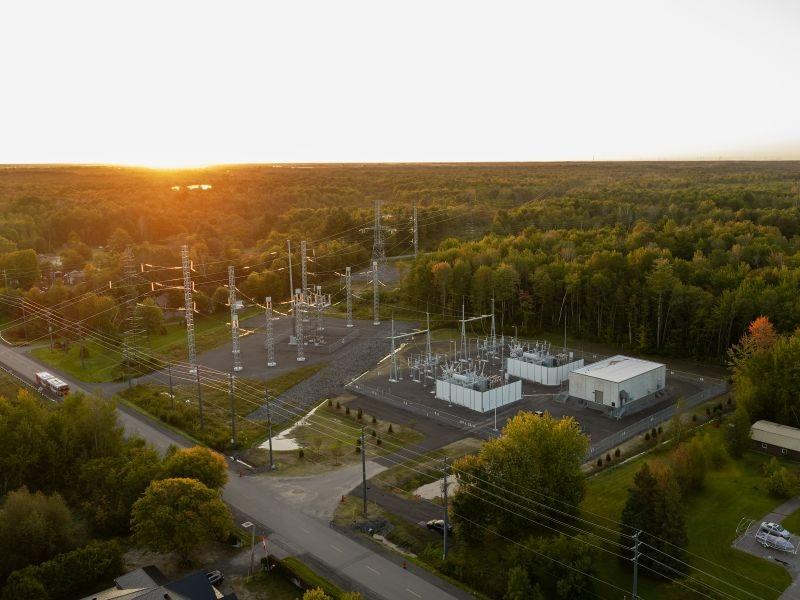




Driven by rapid demand for artificial intelligence (AI) and digital infrastructure, Canada's data centre development pipeline now exceeds existing capacity by more than fourteen times.
These projects are becoming dramatically larger, more geographically concentrated and increasingly situated outside major urban centres. These trends reflect a clear priority: accelerating speed to market.
For many developers, the greatest determinant of how quickly a new data centre can be built is access to electricity. While regulated provinces such as Ontario and Quebec require developers to navigate lengthy grid connection processes, Alberta's deregulated electricity market allows projects to pursue bring-your-own-power (BYOP) arrangements that secure generation independently of the grid.
This flexibility has made Alberta the current - and likely future - epicentre of Canada's AI data centre boom, accounting for over 90 per cent of proposed data centre capacity.
The trade-offs behind Alberta's advantage
At first glance, adding data centres with electricity demand equivalent to roughly 12 per cent of Canada's generation capacity appears to further complicate the country's pathway to net-zero, particularly in a region that continues to rely heavily on thermal gas generation. However, by their nature, BYOP arrangements provide energy choice decoupled from the grid, offering promising opportunities to develop cleaner-energy projects.
Water presents a less visible, but equally important, challenge. Many proposed facilities are adopting advanced closed-loop cooling technologies that substantially reduce on-site water consumption. While these technologies represent an important step forward, they do not eliminate water impacts altogether.
If electricity is supplied by thermal generation, much of a data centre's water footprint is effectively shifted upstream because generating that power requires substantial water for cooling. In some jurisdictions, this indirect water consumption can actually exceed direct operational water use by an order of magnitude, meaning that improving water efficiency within the data centre alone does not necessarily reduce the overall demand on local water resources.
Taken together, the environmental impacts of AI data centres have garnered community opposition, like at the proposed Synapse project. As a result, provincial ambitions to grow the sector are increasingly colliding with local concerns over shared resources and infrastructure, making social acceptance a material risk.
Importantly, these challenges do not diminish Alberta's competitive advantage — they highlight an opportunity to strengthen it.
Sustainability opportunities in play
For many developers, thermal gas generation appears to be the obvious companion to Alberta's BYOP model given that it provides the reliable, dispatchable power that AI computing demands. Projects such as Meta’s recently announced one-gigawatt facility are expected to rely on thermal gas generation under BYOP arrangements.
Yet the economics are changing.
Global demand for gas turbines has created significant manufacturing backlogs, extending procurement timelines and increasing capital costs. At the same time, renewable energy technologies continue to become cheaper and faster to deploy. For developers whose primary objective is bringing computing capacity online as quickly as possible, this changes the equation considerably.
Beyond improving deployment timelines, AI data centres can also catalyze the deployment of new renewable energy generation. Their large, predictable electricity demand makes them attractive counterparties for long-term power purchase agreements, helping finance new renewable projects rather than simply competing for existing clean electricity.
Reliability remains the principal challenge. Unlike thermal gas generation, solar and wind alone cannot provide constant output throughout the day, yet AI facilities require continuous, dependable power. Increasingly, developers are addressing this through hybrid power strategies that balance speed, reliability and cost.
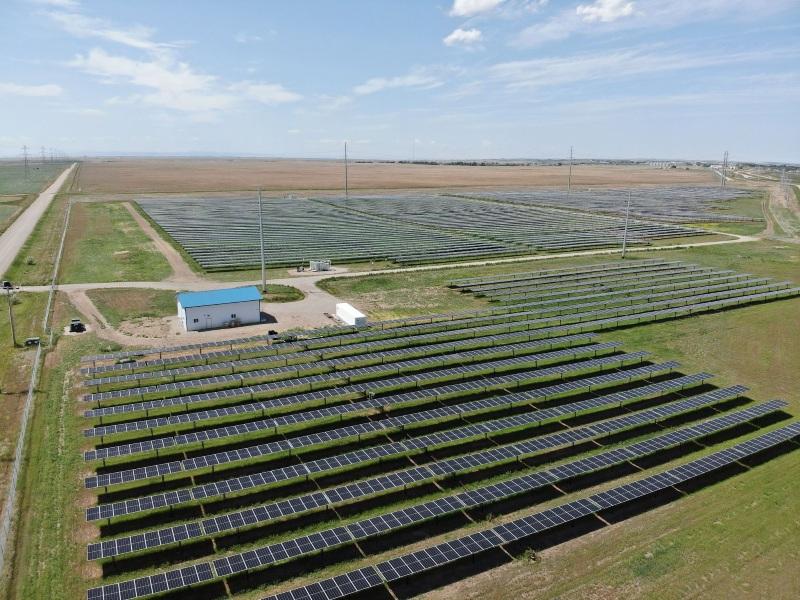
This is good news because hyperscale campuses are typically built in stages as computing capacity is added incrementally over time. Renewable generation can support early project phases while additional grid capacity or dispatchable generation is brought online. Battery storage further improves this model by smoothing renewable variability, reducing reliance on grid power during peak periods and increasing the value of on-site or adjacent renewable generation.
Importantly, BYOP doesn't need to be all-or-nothing. Partially reducing grid connection requirements through renewable generation can accelerate project timelines while lowering emissions and indirect water use.
Early projects demonstrate that these hybrid models are already commercially viable. Crusoe's Spark project in Nevada combines on-site solar generation with second-life EV batteries to power modular AI computing infrastructure and is now expanding sevenfold, illustrating growing confidence in hybrid renewable-powered data centre models.
Hybrid renewable power strategies can help developers avoid both grid connection and gas turbine bottlenecks while reducing emissions and addressing community concerns — strengthening both project economics and helping secure regulatory and community approval.
Powering a clean, competitive digital future
Data centre developers, lenders and investors alike have an opportunity to make consequential decisions about how to design and operate these facilities sustainably.
Those who seize these opportunities are poised not only to win the race to market but also to attract capital more easily via Canada’s forthcoming sustainable finance taxonomy, reduce resource consumption and operating costs and gain much-needed social license to operate.
In doing so, they may also catalyze clean energy production, making Canada's AI infrastructure more sustainable.




 Industry Events
 Locations